Create Routine for Mental Focus by Connecting the Mind, Body, and Soul

Create Routine for Mental Focus by Connecting the Mind, Body, and Soul

Daily Practice Wellness Article

The practice of Yoga Therapy emphasizes the mind-body connection for optimal well-being. It’s been long known that if the mind suffers, the body suffers, and vice versa. Recent advancements in research have a similar message. Western sciences are reconnecting the mind and body through the studies of the vagus nerve, the microbiome, and more, shifting toward a more integrative approach to health and well-being.

Embrace Daily Routines or Rituals

When the mind and/or body become imbalanced, experience fatigue, or feel out of sorts, how do we restore balance, even when outside circumstances feel out of your control? Where do we start in order to improve our mental focus? As a Yoga Therapist, one of my lifestyle suggestions is to create a personal and realistic routine or ritual.

A consistent, daily routine can set the tone for the entire day by bringing a sense of well-being. Embracing a daily routine or ritual can also offer us a way to reconnect with our hearts and to begin building patterns of quiet, calm and non-judgement. Look for the daily rituals that will help balance the constant energy of change, and make sure your rituals are adaptable to your life. Be mindful not to add too much, and make adjustments in small steps.

Below are some simple and effective ways to create a better routine and balance in your life.

Establish a Morning Wake-up Time and Ritual

Maintaining a scheduled wake up time gets your body and mind set in a rhythm to gracefully begin your daily activities. A simple routine of rinsing the face, eyes and mouth brings about a renewed freshness of the body and mind. Then, follow with drinking a glass of room temperature water to help cleanse and awaken the digestive tract. Finish with saying a prayer or blessing for the day – say it from your heart.

Explore a Mind-Body Centering Practice

Whether it’s ten minutes or an hour, integrate a centering and calming practice that promotes mindfulness, such as meditation, yoga, or tai chi. Such practices can be a natural way to refresh your brain. A mindfulness or meditation practice can be as simple as walking outside and noticing the sounds and appreciating the sights of nature. There are also yoga postures or breathing practices that can help with fatigue and exhaustion and give the body and mind a reboot. Or, maybe take 10 minutes to read a book in a cozy, quiet place that is free from distractions.

Set Regular Mealtimes

Even on busy days, make sure to take the time to eat a nourishing diet at regular mealtimes. Regular meal timing helps to promote regular digestive patterns and research suggests that it can support both physical and mental well-being. Eat for the season and think about what would be balancing. For example, is it cold and rainy outside? Soups and stews are great for colder weather and will help warm and fuel your body, particularly during the fall and winter months. You could even turn one of your meals into a mindfulness practice. To practice mindful eating: Turn off all devices and sit down to enjoy a meal by yourself. Eat your meal slowly, savor each bite and tune into the sensations as you chew.

Find Grounding Activities

It’s important in times of disturbance or disorder to look for activities that ground and support us. Can you pause and take a breath, sighing on your exhale? Can you create an inviting, quiet spot in your home to spend some alone time thinking and reflecting? A blanket and some pillows on your favorite chair or corner of the couch can make a great retreat from the world. Or, dedicate a space in your home to place a mat and practice your Mind-Body Centering Practice. 

Cultivate Positive Thoughts

Acknowledge that you are doing the best that you can in your unique situation. 
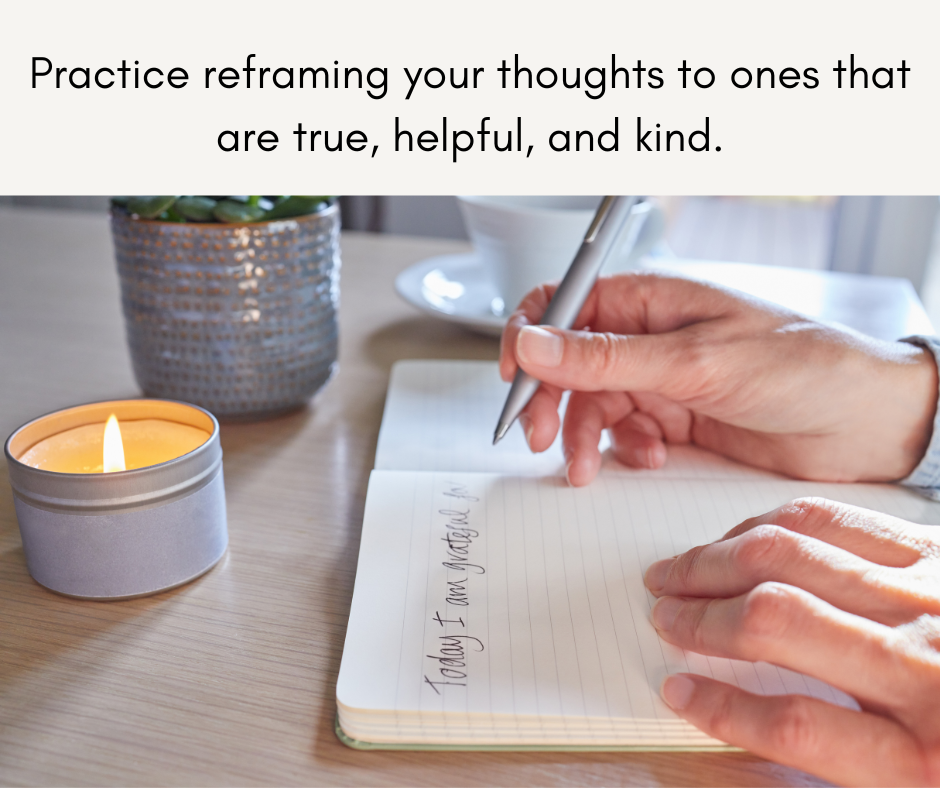
Reframing thoughts image

Strong feelings of fear, uncertainty and doubt can lead to distorted thoughts or a constant narrative of mental negativity. Try positive reframing of thoughts that are true and helpful. Hanging meaningful quotes around your home or in your office can also help spark much needed motivation when you’re feeling overwhelmed or low on energy on one particular day. 

Think positivity is a bunch of hoo-ha? Then call your funk or imbalance what it is. I believe that sometimes we must acknowledge that a situation is not ideal and then use it as an opportunity to go up from there or an opportunity to try something new.  Once we learn to honor our obstacles, we can learn to let go of the distorted thoughts and more easily move forward with more clarity.

Prioritize Sleep & Create Sleep Hygiene Guidelines

Similar to a regular wake-up time, it’s important to maintain a consistent ‘lights out’ schedule. Your brain requires regularity in order to be more focused and regulate your internal clock. A consistent sleep schedule is an accessible way to practice setting a healthy boundary to protect and reboot your physical and mental energy. And, when we practice such boundaries with ourselves, it helps when creating healthy boundaries in other aspects of our life. 

Tips for creating an ideal sleep environment:
  • Get in the habit of turning off technology at a certain hour each evening. Turn off any sound notifications on your devices if it’s not urgent.
  • Keep your phone out of the bedroom to eliminate distractions and blue light at night.
  • Keep your room as dark as possible, or wear a breathable eyemask.

Over time, your body and mind will adjust to your new sleep routine, creating a feeling of safety and peace that will help regulate your nervous system and allow for better quality rest and a boost in cognitive function. 

Take a Mini-Break to Reboot: A Do Nothing Ritual

A basic tenet of Ayurveda is “like increases like and opposites balance.” Similar to physical activity, if thoughts and emotions become excessive in the mind and it results in ongoing stress and overwhelm, doing and thinking more can lead to more stress, overwhelm and other problems. 

Give yourself permission to pause, refresh, rest, and unplug from the hustle culture. This is particularly important if you are taking care of children or parents at home that require even more of your time and attention. Doing nothing for a brief moment is a start. Do nothing and breathe.  Connecting with the breath is a simple way to connect with the soul. (Did you know? Latin word “spiritus:” breathing, breath, air, soul, life.)

And, for those who like to do-do-do and live a fast-paced lifestyle, it takes more work and a conscious effort to slow down. The power is in the stillness. 

Mindfulness Quote

Try incorporating one of these routines and rituals into your daily life. Pick one that is realistic and adaptable to your day, and commit to practicing it for 60 days. Notice how it affects your mental focus, as well as your overall health and well-being.

Seek help from your support network or seek professional help

Remember that you are not alone. Don’t be afraid to ask for help, whether it’s from a family member, a friend, your community or a therapist or wellness professional. 

If you’re interested in gaining more support for your health and wellness routine, feel free to contact me for a complimentary consultation to discuss your individual needs. 

Recharge and Thrive: Proven Tips to Reduce Burnout and Boost Your Energy

Recharge and Thrive: Proven Tips to Reduce Burnout and Boost Your Energy

Daily Practice Evidence-Informed Health Wellness

Burnout has become normalized in our society, but there’s a more fulfilling way to live. Find out how to break free from the cycle of stress and rejuvenate your spirit with these proven tips and self-care strategies. 

Imagine darkness filling the room as a blaring alarm startles you awake. It’s another early morning as you open your eyes, already exhausted by the weight of your to-do list. No amount of caffeine seems to wake you up anymore. By 10am, you find yourself on your third cup of coffee, as you work on work deadlines and run errands. The laundry and dishes are piling up at home, and it feels like if one more thing gets added to your plate, you might fall apart from exhaustion. 

Does this scenario sound familiar to you? 

If you’ve had these feelings lately and feel tired no matter how much rest you get, you may be experiencing burnout. Whether it’s due to work, parenting, caretaking, driving to endless appointments, or simply doing the same routine over and over again, burnout or chronic fatigue are common symptoms often reported by my clients or colleagues. 

For most people, overwhelm and exhaustion are regular symptoms of burnout. When these symptoms show up, they limit clear thinking, increase forgetfulness, and make it significantly more challenging to get things done. 

Let’s look into some of the root causes of burnout and how you can better manage it. 

What causes burnout? 

According to the World Health Organization (WHO), burnout is an occupational phenomenon. It’s defined in ICD-11 as follows:

“Burn-out is a syndrome conceptualized as resulting from chronic workplace stress that has not been successfully managed. It is characterized by three dimensions:

  • feelings of energy depletion or exhaustion;
  • increased mental distance from one’s job, or feelings of negativism or cynicism related to one’s job; and
  • reduced professional efficacy.”

Although WHO refers to burnout specifically in the occupational context, and states it should not be applied to describe experiences in other areas of life, research tells us that the term covers a much larger population. This includes caregiver burnout, parental burnout, pandemic burnout, and social media/noise burnout.

While burnout may not be classified as a medical condition, it does lead to chronic stress, which is considered the root of many health problems.

Yoga Therapy of Boise self-care quote

Regaining your time back  

Creating work and personal boundaries are the first step to counteracting burnout. You first have to get to the root of the problem and find out why you have too much on your plate and the reason you have trouble saying no to new responsibilities and tasks. 

Taking a vacation is a great way to help declutter the mind to allow you to reset and recharge. However, if a vacation isn’t possible, and if you’re finding it challenging to create boundaries and improve your schedule, self-care practices are easily attainable and within your control. And also, try to acknowledge that self-care is not a luxury, it’s a necessity.

“Self-care is not a luxury, it’s a necessity.” 

Self-care strategies to combat burnout 

Whether you have five minutes, an hour or a day, here are some effective self-care strategies to combat burnout. 

1. Setting boundaries
Studies show that it’s important to have boundaries between your work and personal life to prevent burnout. You may also need to set boundaries with a loved one, family, colleague, or friend to protect some of your time and energy. This requires learning to be okay with not pleasing everyone and sticking to the priorities that you have set for yourself. Remember, boundaries are there to protect you.

Try this: Set aside time for yourself regularly and schedule it in your calendar. Communicate with others that you are unavailable, which will likely be a practice to say no to other tasks. Be firm yet kind. Take your scheduled time as an opportunity to do what restores you or what brings you joy, recognizing that self-care may be different each time.

2. Intention setting for the day or a task
Setting a clear, doable intention is the key to building a new habit of reducing stress and slowing down. When you set an intention, focus on the step you’re going to take, not the result. The key is to be realistic and flexible. 

For example, you might set a clear intention to be fully present and aware as you take a shower or cook a meal over the next week. Setting intentions can allow you to be more present and to complete tasks more mindfully and with purpose. You can even explore what it’s like to transform your daily routines into meditation.

3. Walking outside
Getting outside to take short walks throughout the day, or in the morning or evening, can help clear your mind and energize you. Studies show that walking can also improve sleep quality and boost creativity. If you can’t get outside due to weather or other limitations, you can try walking around your home, office, or on a treadmill if one is available. An extra bonus: the physical activity releases endorphins and can help you cope with stress.

4. Daily meditation or mindfulness practices
A daily meditation or mindfulness practice can help bring more self-awareness and make you more present. Such a practice can serve as a rest break and a brain “refresh,” thereby reducing burnout. Our minds are simply not built to stay focused all day. In fact, productivity experts recommend taking a 10- to 15-minute break about every 50 to 90 minutes. Taking intentional meditation breaks is a great way to get grounded, clear and centered. Not only will this time spent help reduce burnout, but it can also improve productivity as well as your mood and overall well-being.

Here’s a short Centering Meditation to help ground you in the present moment. 


Try practicing one of these tips in your daily life. I suggest you choose one thing for two to four weeks to start developing a healthy habit. If you like it, make it part of your daily routine. Also, keep in mind that you cannot pour from an empty cup. Practices can only go so far, and there is not a one-size-fit for all. Don’t be afraid to ask for help from your family, employer or the community. If you need additional support, I can offer resources or help you explore other types of self-care that nurture different aspects of your being – physical, emotional, social, mental, and spirit.

Developing your own personal practice 

A personal practice can help you elevate your daily routine and regain control over your day. It also needs to be personal enough and deep enough for you to prioritize your self-care and follow through.   

Kick-start your personal practice and self-care with a Yoga Therapy Package, offered for a limited time. In-person and virtual sessions are available, and package expires in 3 months of purchase. 

Want to learn more? Contact Julie for a free consultation to learn more about how a personal practice can help you improve your well-being and reduce stress with your work, life, and family obligations.

Thank you for reading and know that there is support on your self-care journey.

Transitioning into Fall

Transitioning into Fall

Daily Practice

In order to be in balance and to stay grounded with what is around us, we need to seek or find grounding and balance within ourselves…the best we can. Create a ritual for yourself – maybe something as simple as a 10-minute meditation to steady the mind. Or, start your morning with some gentle sun salutations and balancing postures to invigorate you and prepare you for your day. Finish the practice with a forward fold and a cozy Savansana.

Building Community & Resilience Through a Yoga Practice

Building Community & Resilience Through a Yoga Practice

Daily Practice Inspiration Yoga

Simple Ways to Overcome Your Barriers to Socialize

Three years into the pandemic, many of us are still struggling to find our “new normal.” The way that we live, work, and socialize has completely changed, leaving many of the community aspects of life behind. 

Earlier this year, Arthur Brooks, a Harvard professor and PhD social scientist, wrote an article called, “How We Learned to Be Lonely.” This article articulates the way so many of us have been feeling lately, but maybe haven’t been able to put into words. He brought up a lot of important points that got me thinking about the importance of community and how that relates back to my own yoga practice. 

Why Have We Become Hesitant to Socialize? 

In the article, Brooks explains that community can be healing after experiencing times of crisis. However, in the Covid-19 pandemic, we saw the opposite happen as isolation forced people into their own bubbles forming what he calls, “habitual loneliness.” 

He goes on to say, “If you’ve sought remote work instead of in-person work out of convenience, chosen one-to-one activities over group activities out of awkwardness, or have chosen not to reconnect with old friendships out of sheer numbness, you may be stuck in a pattern of learned solitude.” 

It’s hard to break out of patterns of isolation because loneliness affects executive function,  which are the skills needed to make a phone call, reach out to a friend, or make social plans. That’s why you may feel lonely, yet struggle to make the first step to reach out to your community or social circle. 

Getting Back into Community Spaces  

Why is it so hard to try new things and go back to doing activities in real life? I found myself having a hard time getting dressed, packing a bag, getting out the door– all things I did daily when I worked in an office. 

It turns out that the uncomfortableness we feel when trying something new is just a muscle we have to exercise. The more we do it, the more it will be good for us. 

Brooks offers some advice to overcome the uncomfortable obstacles of socializing more or trying a new activity outside the home. Similarly to building a muscle, he compares it to starting a new exercise routine; it’ll be uncomfortable at first, but you will feel better afterwards: 

“To break the cycle, you may need to try a “countersignal” strategy. Your indolence is probably telling you that getting dressed and going to work will be a hassle, and asking someone over to dinner will be awkward. You should definitely do these things. Think of it as starting an exercise routine after a long period of sedentary life (another common COVID problem). At first your system complains bitterly, but as you push through the discomfort you soon find that you can exercise (or socialize) easily because it has become routine and because you can feel it improving your life.” 

How I Found Community Again Through a Yoga Practice 

One way to build this new social “muscle” is to add classes or activities outside of the house into your weekly schedule. This past year, I started going to yoga classes in the evening,  which is the perfect transition from work. Yoga classes or any other type of workout classes are a great activity because they check the box of exercise, socialization, and community all in one.  


It was a welcomed positive change in my life, as I felt the isolation and sedentary lifestyle of long working hours affecting my life and energy. Taking one hour to be completely present without technology and constant notifications can do wonders for your mental health and overall stress levels.  

Tips for trying a yoga class with image

Are you looking to try a new yoga class but don’t know where to begin?

Here’s some tips for getting started:

  1. Look for small group classes:  If you don’t like the idea of a large group, try looking for small group classes, as they can be more accommodating to the individual. 
  2. Arrive early and lay/sit with eyes closed or socialize with others: Do you want to be in a group setting but are not ready or wanting to socialize? It’s okay to set up before the beginning of class, either sitting or laying on the floor with our eyes closed as other participants enter and set up. Your teacher and others will know to leave you space before class begins. 
  3. Meet the instructor beforehand: If you have any questions or special accommodations, it might help to meet the instructor beforehand. This can help put you at ease and make you feel more comfortable before the first class. 
  4. Take a friend with you: It’s always easier to try new things in pairs. Grab a friend and try out a new class together. 
  5. Try just one class to start: Tell yourself that you’ll just try out one class. The first step to starting a habit is showing up. 

Try out these tips and see how it goes. You can also set weekly goals to try new activities until it becomes second nature again. No matter how busy life gets, we have to remember that social interaction and community are essential to our well-being. 

After laying out some actionable plans, Brooks closes out the article with a great reminder that we can learn from:

“If you can remember the warmth and happiness of your old social self and make a few changes, 2023 can be a year of renewal.”

Attend Group Yoga & Wellness Classes in Auburn, AL

Are you local to the greater Auburn, AL and looking to start a yoga practice?  Julie Watson offers onsite group and wellness classes and private sessions at her yoga office space to help relieve stress, build resilience, care for acute and  chronic pain, and support neurological conditions and disorders. She also offers virtual sessions for those located outside of the greater Auburn area. Reach out for a free consultation or to discuss booking a class or wellness program at your office.

2 Simple Breath Techniques for Managing Stress

2 Simple Breath Techniques for Managing Stress

Daily Practice

Try These Soothing Techniques to Calm Your Mind and Body in Times of Stress or Anxiety. 

Calming the mind during stressful or uncertain times can feel overwhelming. Navigating fear and uncertainty can be challenging for the mind and body as well. The breath can be used as a simple tool to support the mind and body and tap into our inner resilience. Breathing naturally soothes the nervous system, which helps calm the mind. 

Today, I’m going to share with you two simple breathing techniques that you can do from home. Even though both of these techniques are easy, the trick is to remember to do them regularly. Developing a regular practice will help you build a healthy habit and reduce your overall stress level over time. You can do these sitting in a chair during the day or by simply lying on the floor. The beauty of this practice is that it’s incredibly versatile and easy to do from wherever you are at the moment, with whatever energy level you have.

Diaphragmatic Breath

You may have heard of the diaphragmatic breath, or belly breath before. The diaphragm is the most important of the muscles that helps move air in and out of the lungs. Attached to the ribs and lumbar spine, the diaphragm is shaped like a parachute or dome. When the diaphragm contracts on an inhalation, the dome pushes downward and if the abdomen is relaxed the belly will gently expand outward. On an exhalation, the diaphragm relaxes and moves back up.  Belly breathing can help most people feel relaxed. As you practice it, periodically pause and observe any changes in the mind or body.

Benefits of this Exercise

In our day to day lives, it’s easy to become overstimulated with electronics or notifications on our phones. This belly breathing technique will help quiet the mind and calm the nervous system from everyday stresses. The exhale helps to stimulate the parasympathetic nervous system, which is the nervous system in charge of controlling your body at rest (these are functions like digestion and heart rate). 

  • Helps quiet the mind and nervous system. 
  • Exhale helps to stimulate the parasympathetic stimulus nervous system. This is the nervous system in charge of controlling your body at rest (things like digestion and heart rate). 
  • Eases fears of unknown, uncertainty and doubt, and monkey mind.  
  • Helps restore your sense of self, internally. 

How to Do It

  1. Sit in a comfortable upright position, or lie on your back on the floor. 
  2. Relax your shoulders, letting go of all tension in your upper body. 
  3. Put one hand on your chest and hand and on your stomach.  
  4. Breath in through your nose for two seconds, allowing the air to expand into your diaphragm. Allow your chest to remain mostly still while your stomach expands like a balloon. 
  5. Next, purse your lips and exhale for two seconds, gently contracting your abdominal muscles. If comfortable, seal your lips and exhale through the nose.
  6. Repeat this exercise several times for two minutes, in a slow and controlled manner. Afterwards, you should feel a sense of calm and relaxation in your body. 
  7. As you become comfortable with this breathing practice, explore making the exhale longer than the inhale to experience a similar (or different) calming effect.

Basic Bee Breath

This next technique is known as the bee breath, or brahmari. The name brahmari is derived from the Sanskrit term for bee. For this breath, you’ll be making a humming sound that resembles a buzzing bee. Known for its relaxing effects, this breath can help break up mental thought patterns that cause anxiety. 

Benefits of this Exercise

This exercise helps soothe the nervous system by focusing your breath and limiting outside distractions and thoughts. It can help calm the mind from racing thoughts and ease anxiety by using longer focused breaths. 

  • Soothes the nervous system with longer breaths. 
  • Helps create a calm, centered inner voice. 
  • Reduces inflammation in the body by decreasing stress. 
  • Eases your fight-or-flight response (sympathetic nervous system). 
  • Activates your body’s built-in stress release (parasympathetic nervous system).  

How to Do It

  1. Sit comfortably in a seated upright position or  or lie on your back on the floor. 
  2. Take a breath in slowly through your nostrils. 
  3. Exhale and make an “mmmmm” sound with your mouth closed. This should sound like a buzzing or humming sound. Keep your facial muscles relaxed and lips gently sealed. 
  4. Focus on the sound you make as you exhale and ignore all outside distractions and thoughts. Notice and feel and vibratory sensations in your body. This should create a relaxing and calming feeling. 
  5. Inhale again through your nostrils and exhale making the “mmmmm” sound. Repeat this exercise for two minutes. 

You can do these breathing exercises wherever you feel comfortable. Whether it’s sitting upright at your kitchen table or office chair, driving in traffic, or lying on the floor, you’ll be able to reap the benefits by simply taking two minutes to focus on your breath. Remember, no matter how overwhelmed, stressed, or busy you may feel, taking two minutes to slow down and focus on yourself can help you recenter and regain control of thoughts again.  

If you’d like to explore more, let’s get started. You can book a complimentary 1:1 consultation with me here.

How Yoga Therapy Helps Me Balance My Artistic Career

How Yoga Therapy Helps Me Balance My Artistic Career

Daily Practice Wellness


After a 6am flight, a presentation and a photoshoot, I walked through the door of our guest house and practically collapsed on the floor. My assistant was behind me carrying my bags and I barely had enough energy to greet my team. “I have to lay down,” I said. My head was hurting, my throat was swelling, and I could barely keep my eyes open. 

This wasn’t the first time I had overbooked myself on a business trip. Over the past few years, I had pushed myself to exhaustion to keep up with the pace of my work. Because I love what I do, I used that as an excuse to say yes to everything and sometimes push myself a little too far.  

What do I do for work? I am an actor, writer, and marketing consultant, and on this particular trip, I REALLY overbooked myself. 

 Let’s take a look at my schedule…. 

  • Thursday 3pm– Met with a corporate client in San Francisco. 
  • Thursday 5pm– Stopped by a coffee shop to use WIFI and finish a consulting project.
  • Thursday 7pm– Had dinner with another tech client. During dinner, my throat started to swell up.

 After my client dinner, I stayed up until 1am because I was packing and still planning logistics for my trip. 

  • Friday 4am– Took Lyft to the airport to catch a 6am flight to Phoenix. Drank tea and slept on the plane because my throat was very swollen (I could barely talk at this point).  
  • Friday 9am– Finished coordinating catering for my workshop. 
  • Friday 11am– Took a Lyft to my office and finished my presentation.   
  • Friday 12pm– Presented a workshop about blogging for your business.  
  • Friday 2pm– Changed and did hair and makeup for a photoshoot. Tried to nap on the hammock outside for 20 minutes. 
  • Friday 3pm– Did a photoshoot with my photographer and struggled to keep my eyes open due to my cold. 
  • Friday 6pm– Traveled to our Airbnb to meet with my team. Practically collapsed on the floor from exhaustion. My team was very understanding and let me rest, while they went to check in for the conference. 
  • Friday 9pm- Prepared for a 3-day business conference that required 10+ hour days and working through the weekend. 

 Yikes! It’s no wonder I got sick. This was one of the trips that made me change the way I was working and living. I like to compare a scenario like this to chocolate. You may love chocolate, but if you have too much of it, it will make you sick. 

Self-Care is More than Ticking off a Checklist 

It was after this trip that I knew something had to change. I wasn’t proud of my sleep habits and that I didn’t build any breaks into my schedule leading up to the trip. 

As someone who enjoys running, working out everyday, and eating well, it seemed like burnout wouldn’t affect me. But it did. As a result, I spent years researching and working with coaches and doctors to find out the root cause of my fatigue and chronic pain. 

 For one, I do have severe scoliosis with a curvature in my spine of about 50 degrees. This contributed to a lot of my pain and fatigue that would usually leave me stuck in bed by the end of the week. I knew I didn’t want to live like this, and I worked hard to learn different therapeutic approaches for improving my quality of life. 

When I moved to San Francisco, I started taking Saturday morning yoga classes in my apartment building. We had our own yoga studio, so I could simply go down the elevator and do yoga without having to leave home. The class was taught by Julie Watson. One of the residents in my building said, “you have to take her class, she’s so therapeutic.” 

After taking group classes, I had the chance to work with Julie one-on-one for private yoga therapy sessions. I had just booked an acting tour which had a demanding travel schedule, so we met at her studio for sessions when I was back in San Francisco. The timing couldn’t have been better. At this point in my life, I was dealing with a lot of stress due to my travel schedule and an unexpected move that came up. 

What I Learned in Yoga Therapy: 

Julie taught me really simple breathing exercises that I can do anywhere. These exercises help me clear my mind and I still practice them often. 

Try this breathing exercise at home: Lay flat on your back with your feet flat on the floor and your knees bent. Next, close your eyes and count backwards from 4-3-2-1. Counting backwards helps focus your mind so that it’s not running in circles, which is what Julie describes as “monkey mind.”

Other tips that Julie gave me while on my theater tour:

  • Drink warming drinks: During the winter months, Julie suggested that I try having hot tea or soup at the end of the day after performing. This was something simple I could do in the hotel. I could easily carry tea in my purse. 

According to Julie, “Hot drinks or cooked foods helps improve digestion and elimination, which therefore gives your immunity a boost. They can also be very nourishing and grounding, which is needed during cooler temps or when you’re feeling scattered or cold.”

  • Remember to breath: So much tension in our lives can be attributed to forgetting to breath. This simple technique reminded me to breathe through stressful moments and let go of tension in the body before it turns into stress. 
  • Self–Massage: Julie also taught me effective self-massage techniques. Using oils, like coconut oil or vitamin E oil, can create a calming effect that can help you sleep better. 

You Don’t Have to Suffer for Your Art 

I think artists and creative entrepreneurs can sometimes get caught up in the idea that they either have to choose between their well-being or their art. However, I’ve tried to develop a career and lifestyle that integrates health and wellness into my work. Together, I think we can break the stereotype that you have to suffer for your art. 

I think art can enrich our lives. It can bring us more energy and vibrancy. It can inspire us to be better versions of ourselves. And caring for our health and well-being is an integral part of creating good art. 

I learned first-hand that it takes an immense amount of energy to perform. You’re going to feel tired afterwards. Fortunately, these techniques and tools have allowed me to recover in a healthy way so that I can still enjoy a day off, have coffee with a friend, or even visit a museum (without being on a schedule!) 

Can I cure myself of scoliosis & chronic pain? Maybe not completely, but the techniques and tools I have learned through private yoga therapy have improved my life by a significant amount. 

If there’s one thing I learned, it’s that life is for living, not just working. I think Julie does a fantastic job in bringing out the best in people and teaching them simple tools to live a healthy, balanced life. I’m so thankful that we crossed paths and we got to work together. 

I hope today you can take a breath, take a moment, and simply enjoy this life and this day you’ve been given. 

For someone who is always in action, I asked Julie what I should do next and she said, “pause.” 

Momentum doesn’t always come from being in motion. A pause can be the one thing that you need in order to move forward.

Ready to start your yoga therapy journey? To book a virtual session with Julie, please click here.