Almond Date ‘Ojas’ Balls

Almond Date ‘Ojas’ Balls

Nourish

These almond and date balls make a great afternoon treat or a satisfying energy bite for hiking or biking. Inspired by an ‘ojas’ date recipe shared by my colleagues, I decided to make my version of a sweet and nourishing snack.

Ojas containing foods are foods that are high in nutritious ingredients that support the structure of your body and help boost your immunity and vitality.

Dates, almonds, ghee and saffron are traditionally considered to be high in ojas and are a rich source of antioxidants. Dates, almonds and ghee also deliver a large amount of nutrients. An additional benefit of this recipe: cinnamon, cardamom, ginger and saffron aid in digestion.

I love the spices in this recipe, so I use a ‘heaping’ 1/4 teaspoon measurement. If you like less spice, use a 1/4 teaspoon each for the ginger, cinnamon and cardamom.

  • 1 cup raw almonds
  • 10 medjool dates, pitted
  • 1 Tbs ghee (or coconut oil if preferred)
  • pinch saffron, grounded in mortar and pestle
  • 1/4 heaping tsp of ginger (dried)
  • 1/4 heaping tsp of cinnamon (Ceylon)
  • 1/4 heaping tsp of cardamom

Add almonds to a food processor and process until well ground. Don’t process so much that it turns to a flour, but grind enough that it has a finely ground consistency. Remove contents to a bowl and set aside.

Warm the ghee (or coconut oil) on very low heat until melted. Add the spices and mix well for 30 to 60 seconds. Remove from heat and let it sit for a few minutes to cool slightly. Add dates and massage the juices into the dates.

Add the dates, spices, and oil mixture to the food processor, then pour the ground almonds on top. (I found this step to blend cleaner and easier in my mixer.) Pulse and process until well combined. Roll the mixture into walnut-sized balls.

Store in a container or wrap individually. Be considerate on using clean utensils and having no water come in when preparing so there’s no mold issues.

Makes approximately 16 balls.

Spiced Carrot Soup with Pistachios and Rosemary

Spiced Carrot Soup with Pistachios and Rosemary

Nourish

Great for a windy and rainy day, this comforting soup warms the body. Seasoned with harissa, a blend of pepper, caraway, coriander and cumin, enhance the flavor of the soup, while the pistachios and rosemary add a little texture and color.

  • 2 Tbs olive oil, divided
  • 2 lbs carrots, peeled and diced
  • 1 cup water
  • 2 cups vegetable or chicken stock
  • 4 Tbs unsalted butter
  • 2-3 tsp harissa paste*
  • 1 ½ tsp salt
  • 2 Tbs rosemary, chopped
  • ½ cup raw pistachios

Lightly sauté carrots in 1 Tbs of olive oil. Add water and stock and bring to a boil. Remove from heat. Add butter and harissa and blend well using an immersion blender or transfer to a blender. Add salt to taste. Return to low heat until ready to serve. In a separate pan, heat remaining olive oil on medium heat. Sauté rosemary until it sizzles, then add pistachios and cook until they just start to lightly brown. Remove from heat.  Top soup with pistachios and rosemary.

*Harissa Paste

You can buy harissa paste already made or make it yourself with red peppers or dried chiles. I use a dry (mild heat) blend that’s made with guajillo peppers, caraway, coriander, sweet and smoked paprika, cumin, cinnamon and salt. If using a dry blend, whisk together 3 Tbs of the spice with 3 Tbs of olive oil, 1-2 minced garlic cloves and the juice of one lemon. Let sit for an hour before using and store in an airtight container. It keeps in the refrigerator for up to a month.

Serves 6-8.

Create Routine for Mental Focus by Connecting the Mind, Body, and Soul

Create Routine for Mental Focus by Connecting the Mind, Body, and Soul

Daily Practice Wellness Article

The practice of Yoga Therapy emphasizes the mind-body connection for optimal well-being. It’s been long known that if the mind suffers, the body suffers, and vice versa. Recent advancements in research have a similar message. Western sciences are reconnecting the mind and body through the studies of the vagus nerve, the microbiome, and more, shifting toward a more integrative approach to health and well-being.

Embrace Daily Routines or Rituals

When the mind and/or body become imbalanced, experience fatigue, or feel out of sorts, how do we restore balance, even when outside circumstances feel out of your control? Where do we start in order to improve our mental focus? As a Yoga Therapist, one of my lifestyle suggestions is to create a personal and realistic routine or ritual.

A consistent, daily routine can set the tone for the entire day by bringing a sense of well-being. Embracing a daily routine or ritual can also offer us a way to reconnect with our hearts and to begin building patterns of quiet, calm and non-judgement. Look for the daily rituals that will help balance the constant energy of change, and make sure your rituals are adaptable to your life. Be mindful not to add too much, and make adjustments in small steps.

Below are some simple and effective ways to create a better routine and balance in your life.

Establish a Morning Wake-up Time and Ritual

Maintaining a scheduled wake up time gets your body and mind set in a rhythm to gracefully begin your daily activities. A simple routine of rinsing the face, eyes and mouth brings about a renewed freshness of the body and mind. Then, follow with drinking a glass of room temperature water to help cleanse and awaken the digestive tract. Finish with saying a prayer or blessing for the day – say it from your heart.

Explore a Mind-Body Centering Practice

Whether it’s ten minutes or an hour, integrate a centering and calming practice that promotes mindfulness, such as meditation, yoga, or tai chi. Such practices can be a natural way to refresh your brain. A mindfulness or meditation practice can be as simple as walking outside and noticing the sounds and appreciating the sights of nature. There are also yoga postures or breathing practices that can help with fatigue and exhaustion and give the body and mind a reboot. Or, maybe take 10 minutes to read a book in a cozy, quiet place that is free from distractions.

Set Regular Mealtimes

Even on busy days, make sure to take the time to eat a nourishing diet at regular mealtimes. Regular meal timing helps to promote regular digestive patterns and research suggests that it can support both physical and mental well-being. Eat for the season and think about what would be balancing. For example, is it cold and rainy outside? Soups and stews are great for colder weather and will help warm and fuel your body, particularly during the fall and winter months. You could even turn one of your meals into a mindfulness practice. To practice mindful eating: Turn off all devices and sit down to enjoy a meal by yourself. Eat your meal slowly, savor each bite and tune into the sensations as you chew.

Find Grounding Activities

It’s important in times of disturbance or disorder to look for activities that ground and support us. Can you pause and take a breath, sighing on your exhale? Can you create an inviting, quiet spot in your home to spend some alone time thinking and reflecting? A blanket and some pillows on your favorite chair or corner of the couch can make a great retreat from the world. Or, dedicate a space in your home to place a mat and practice your Mind-Body Centering Practice. 

Cultivate Positive Thoughts

Acknowledge that you are doing the best that you can in your unique situation. 

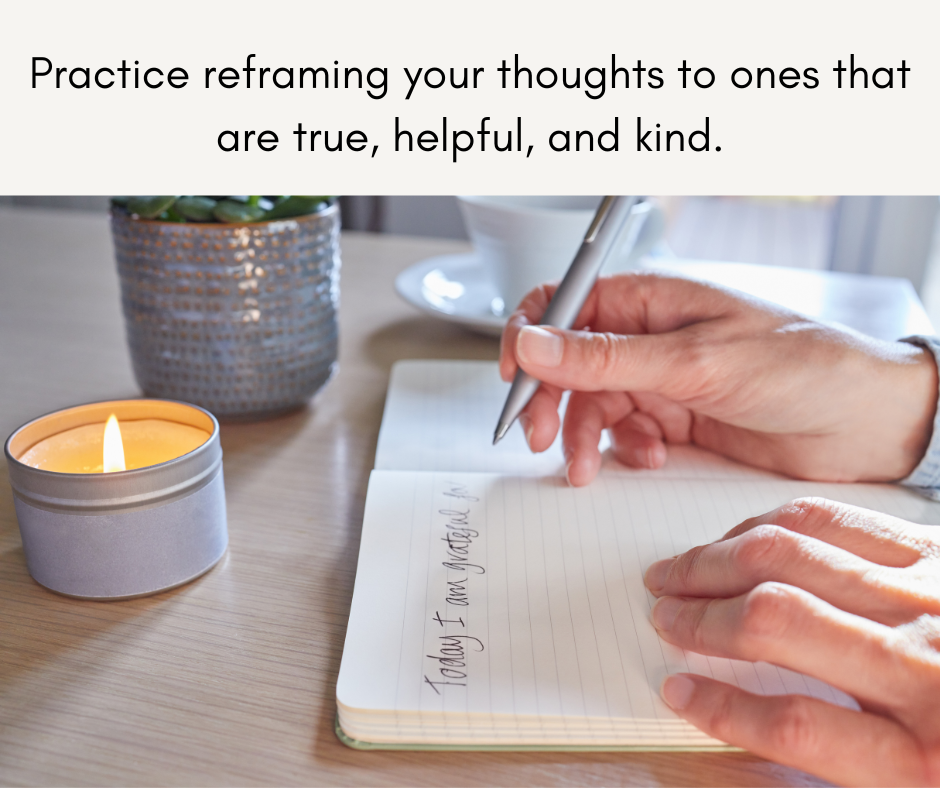
Reframing thoughts image

Strong feelings of fear, uncertainty and doubt can lead to distorted thoughts or a constant narrative of mental negativity. Try positive reframing of thoughts that are true and helpful. Hanging meaningful quotes around your home or in your office can also help spark much needed motivation when you’re feeling overwhelmed or low on energy on one particular day. 

Think positivity is a bunch of hoo-ha? Then call your funk or imbalance what it is. I believe that sometimes we must acknowledge that a situation is not ideal and then use it as an opportunity to go up from there or an opportunity to try something new.  Once we learn to honor our obstacles, we can learn to let go of the distorted thoughts and more easily move forward with more clarity.

Prioritize Sleep & Create Sleep Hygiene Guidelines

Similar to a regular wake-up time, it’s important to maintain a consistent ‘lights out’ schedule. Your brain requires regularity in order to be more focused and regulate your internal clock. A consistent sleep schedule is an accessible way to practice setting a healthy boundary to protect and reboot your physical and mental energy. And, when we practice such boundaries with ourselves, it helps when creating healthy boundaries in other aspects of our life. 

Tips for creating an ideal sleep environment:
  • Get in the habit of turning off technology at a certain hour each evening. Turn off any sound notifications on your devices if it’s not urgent.
  • Keep your phone out of the bedroom to eliminate distractions and blue light at night.
  • Keep your room as dark as possible, or wear a breathable eyemask.

Over time, your body and mind will adjust to your new sleep routine, creating a feeling of safety and peace that will help regulate your nervous system and allow for better quality rest and a boost in cognitive function. 

Take a Mini-Break to Reboot: A Do Nothing Ritual

A basic tenet of Ayurveda is “like increases like and opposites balance.” Similar to physical activity, if thoughts and emotions become excessive in the mind and it results in ongoing stress and overwhelm, doing and thinking more can lead to more stress, overwhelm and other problems. 

Give yourself permission to pause, refresh, rest, and unplug from the hustle culture. This is particularly important if you are taking care of children or parents at home that require even more of your time and attention. Doing nothing for a brief moment is a start. Do nothing and breathe.  Connecting with the breath is a simple way to connect with the soul. (Did you know? Latin word “spiritus:” breathing, breath, air, soul, life.)

And, for those who like to do-do-do and live a fast-paced lifestyle, it takes more work and a conscious effort to slow down. The power is in the stillness. 

Mindfulness Quote

Try incorporating one of these routines and rituals into your daily life. Pick one that is realistic and adaptable to your day, and commit to practicing it for 60 days. Notice how it affects your mental focus, as well as your overall health and well-being.

Seek help from your support network or seek professional help

Remember that you are not alone. Don’t be afraid to ask for help, whether it’s from a family member, a friend, your community or a therapist or wellness professional. 

If you’re interested in gaining more support for your health and wellness routine, feel free to contact me for a complimentary consultation to discuss your individual needs. 

Celery Root Fennel Soup

Celery Root Fennel Soup

Nourish

This soup is great for Kapha season as we transition from the cooler temps to the spring. Celery root, which is one of lighter of the root vegetables, is a mild diuretic and slightly warming for the lungs and sinuses. Fennel and celery are diuretics as well. All three help pacify Kapha and encourage healthy digestion. Adjust texture and flavor with other spices by adding a fingerling potato or splash of heavy cream or replace the quantity of butter with ghee or olive oil. You can also use the fennel stalks in lieu of the bulb if you aren’t sure for what to use them.

  • 2 Tbs olive oil
  • 1 Tbs unsalted butter
  • 1 small onion, chopped
  • 1 fennel bulb, chopped
  • 3 stalks celery, chopped
  • 1 tsp salt
  • 1 or 2 fingerling potatoes, chopped (optional)
  • 3 cloves garlic, chopped
  • 1 large celery root, peeled and chopped
  • 2 bay leaves
  • 5-6 cups stock (vegetable or chicken, less for a thicker consistency)
  • ¼ tsp black pepper
  • 1/8 cup half & half (optional)
  • Salt and pepper
  • Fennel fronds or fresh dill for garnish

In a large pot, heat oil and butter. Sauté onion, fennel, and celery until tender for about 5-10 minutes, adding 1 tsp salt a few minutes into cooking. Add potato if using, then add garlic and cook for 30 seconds to 1 minute, until garlic is fragrant. Add celery root, stock and bay leaves and bring to a boil and simmer for 20-30 minutes, until celery root has softened. Remove from heat and purée mixture with hand blender. Add pepper and if using, half & half and stir. Salt and pepper to taste.

Garnish bowls with chopped fennel fronds or fresh dill.

Serves 4-6.

Online Yoga Shown to Clinically Reduce Low Back Pain

Research illustrates the value of yoga for the treatment of chronic low back pain based a new study by the Cleveland Clinic. People in the study published in JAMA also reported better sleep quality and reduced use of pain medications.

“Yoga is proving to be a valuable component of the comprehensive management of low back pain, a condition for which traditional therapies often fall short.”

Low-impact yoga and exercise found to help older women manage urinary incontinence

Total urinary incontinence frequency decreased by an average of 2.3 episodes a day among those who underwent pelvic yoga and 1.9 episodes a day among those who underwent physical conditioning. Per the study, reductions in stress-type episodes per day did not significantly differ between the two treatment groups, although yoga resulted in modestly greater improvement in some more specialized types of urinary symptoms.It’s good to keep moving and to have options. Do what works best for your lifestyle.

Mindful breathing significantly reduces pain intensity among people with cancer

Breathing awareness and techniques are one of the key ancient yogic tools. A recent study has shown that integrating a 20-minute mindful breathing session rapidly reduced pain intensity and anxiety among people with cancer. Results reported in the BMJ Journals study reported that 100% of the participants assigned mindful breathing responded to the intervention, and none experienced adverse events. “This brief and accessible intervention offers a complementary approach to traditional pharmacological strategies.”

Recharge and Thrive: Proven Tips to Reduce Burnout and Boost Your Energy

Recharge and Thrive: Proven Tips to Reduce Burnout and Boost Your Energy

Daily Practice Evidence-Informed Health Wellness

Burnout has become normalized in our society, but there’s a more fulfilling way to live. Find out how to break free from the cycle of stress and rejuvenate your spirit with these proven tips and self-care strategies. 

Imagine darkness filling the room as a blaring alarm startles you awake. It’s another early morning as you open your eyes, already exhausted by the weight of your to-do list. No amount of caffeine seems to wake you up anymore. By 10am, you find yourself on your third cup of coffee, as you work on work deadlines and run errands. The laundry and dishes are piling up at home, and it feels like if one more thing gets added to your plate, you might fall apart from exhaustion. 

Does this scenario sound familiar to you? 

If you’ve had these feelings lately and feel tired no matter how much rest you get, you may be experiencing burnout. Whether it’s due to work, parenting, caretaking, driving to endless appointments, or simply doing the same routine over and over again, burnout or chronic fatigue are common symptoms often reported by my clients or colleagues. 

For most people, overwhelm and exhaustion are regular symptoms of burnout. When these symptoms show up, they limit clear thinking, increase forgetfulness, and make it significantly more challenging to get things done. 

Let’s look into some of the root causes of burnout and how you can better manage it. 

What causes burnout? 

According to the World Health Organization (WHO), burnout is an occupational phenomenon. It’s defined in ICD-11 as follows:

“Burn-out is a syndrome conceptualized as resulting from chronic workplace stress that has not been successfully managed. It is characterized by three dimensions:

  • feelings of energy depletion or exhaustion;
  • increased mental distance from one’s job, or feelings of negativism or cynicism related to one’s job; and
  • reduced professional efficacy.”

Although WHO refers to burnout specifically in the occupational context, and states it should not be applied to describe experiences in other areas of life, research tells us that the term covers a much larger population. This includes caregiver burnout, parental burnout, pandemic burnout, and social media/noise burnout.

While burnout may not be classified as a medical condition, it does lead to chronic stress, which is considered the root of many health problems.

Yoga Therapy of Boise self-care quote

Regaining your time back  

Creating work and personal boundaries are the first step to counteracting burnout. You first have to get to the root of the problem and find out why you have too much on your plate and the reason you have trouble saying no to new responsibilities and tasks. 

Taking a vacation is a great way to help declutter the mind to allow you to reset and recharge. However, if a vacation isn’t possible, and if you’re finding it challenging to create boundaries and improve your schedule, self-care practices are easily attainable and within your control. And also, try to acknowledge that self-care is not a luxury, it’s a necessity.

“Self-care is not a luxury, it’s a necessity.” 

Self-care strategies to combat burnout 

Whether you have five minutes, an hour or a day, here are some effective self-care strategies to combat burnout. 

1. Setting boundaries
Studies show that it’s important to have boundaries between your work and personal life to prevent burnout. You may also need to set boundaries with a loved one, family, colleague, or friend to protect some of your time and energy. This requires learning to be okay with not pleasing everyone and sticking to the priorities that you have set for yourself. Remember, boundaries are there to protect you.

Try this: Set aside time for yourself regularly and schedule it in your calendar. Communicate with others that you are unavailable, which will likely be a practice to say no to other tasks. Be firm yet kind. Take your scheduled time as an opportunity to do what restores you or what brings you joy, recognizing that self-care may be different each time.

2. Intention setting for the day or a task
Setting a clear, doable intention is the key to building a new habit of reducing stress and slowing down. When you set an intention, focus on the step you’re going to take, not the result. The key is to be realistic and flexible. 

For example, you might set a clear intention to be fully present and aware as you take a shower or cook a meal over the next week. Setting intentions can allow you to be more present and to complete tasks more mindfully and with purpose. You can even explore what it’s like to transform your daily routines into meditation.

3. Walking outside
Getting outside to take short walks throughout the day, or in the morning or evening, can help clear your mind and energize you. Studies show that walking can also improve sleep quality and boost creativity. If you can’t get outside due to weather or other limitations, you can try walking around your home, office, or on a treadmill if one is available. An extra bonus: the physical activity releases endorphins and can help you cope with stress.

4. Daily meditation or mindfulness practices
A daily meditation or mindfulness practice can help bring more self-awareness and make you more present. Such a practice can serve as a rest break and a brain “refresh,” thereby reducing burnout. Our minds are simply not built to stay focused all day. In fact, productivity experts recommend taking a 10- to 15-minute break about every 50 to 90 minutes. Taking intentional meditation breaks is a great way to get grounded, clear and centered. Not only will this time spent help reduce burnout, but it can also improve productivity as well as your mood and overall well-being.

Here’s a short Centering Meditation to help ground you in the present moment. 


Try practicing one of these tips in your daily life. I suggest you choose one thing for two to four weeks to start developing a healthy habit. If you like it, make it part of your daily routine. Also, keep in mind that you cannot pour from an empty cup. Practices can only go so far, and there is not a one-size-fit for all. Don’t be afraid to ask for help from your family, employer or the community. If you need additional support, I can offer resources or help you explore other types of self-care that nurture different aspects of your being – physical, emotional, social, mental, and spirit.

Developing your own personal practice 

A personal practice can help you elevate your daily routine and regain control over your day. It also needs to be personal enough and deep enough for you to prioritize your self-care and follow through.   

Kick-start your personal practice and self-care with a Yoga Therapy Package, offered for a limited time. In-person and virtual sessions are available, and package expires in 3 months of purchase. 

Want to learn more? Contact Julie for a free consultation to learn more about how a personal practice can help you improve your well-being and reduce stress with your work, life, and family obligations.

Thank you for reading and know that there is support on your self-care journey.

Transitioning into Fall

Transitioning into Fall

Daily Practice

In order to be in balance and to stay grounded with what is around us, we need to seek or find grounding and balance within ourselves…the best we can. Create a ritual for yourself – maybe something as simple as a 10-minute meditation to steady the mind. Or, start your morning with some gentle sun salutations and balancing postures to invigorate you and prepare you for your day. Finish the practice with a forward fold and a cozy Savansana.

Fresh Vegetable Quinoa Soup

Fresh Vegetable Quinoa Soup

Nourish

This soup uses a large variety of summer/early autumn vegetables. Substituting the zucchini and corn with butternut squash and turnips and using canned tomatoes in lieu of tasty summer tomatoes would be an easy transition for a warming late autumn or winter soup. This soup is well balanced with flavor and texture and is quite fulfilling in the belly.

  • 2 Tbs olive oil
  • 1 medium onion, diced
  • 1 poblano pepper, seeded and diced
  • 2 medium carrots, diced
  • 4 cloves garlic, minced
  • 1-inch piece ginger, minced
  • 2 tsp dried Mexican oregano
  • 4 medium tomatoes, diced
  • 2 medium red potatoes, diced
  • ½ tsp salt
  • 4 cups vegetable or chicken stock
  • 2 cups water
  • ½ tsp smoked paprika
  • ½ cup quinoa, rinsed
  • 1 small zucchini, diced
  • 1 ¼ cup corn kernels (2 cobs)
  • Salt and pepper to taste
  • ¼ cup cilantro, chopped, and more for garnish

In a large pot, sauté onions, carrots and peppers until onions become slightly translucent. Add garlic and ginger and sauté for about 1 minute. Add Mexican oregano and tomatoes, cooking for about 5 minutes, then add the potatoes, stock and water and bring to a boil. Add the quinoa then reduce to a simmer. Cook for approximately 10-15 minutes and stir occasionally. Add salt and pepper to taste, and possibly more smoked paprika. Stir in cilantro before serving and garnish individual portions as desired. Although not listed as an ingredient, a splash of lime adds a nice brightness.

Serves 6-8.